
Your First Concert Photo Pass: How to Get It and What to Know
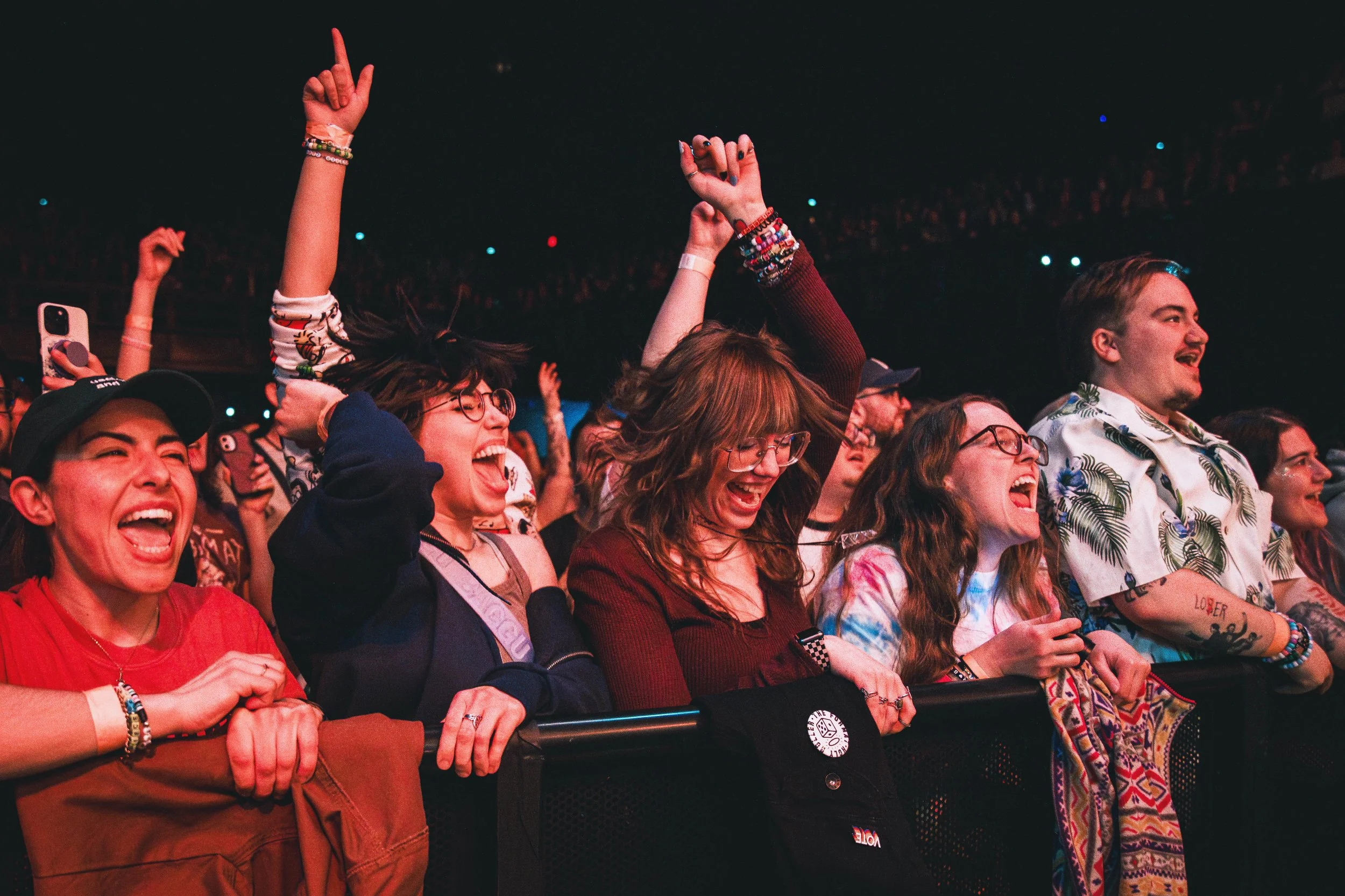
Every concert photographer has a first show. Mine wasn't glamorous. No photo pit, no credentials, no press contact on the other end of an email. Just a camera, a ticket I bought myself, and a band that was gracious enough to let me bring a camera inside (shout out Bermuda Search Party, you guys are what got me started). That's where most people start, and honestly, it's not a bad place to begin.
Here's everything you need to know to get yourself started.
Build the Portfolio First
Before any publication credentials you, before any PR company emails you back, you need work to show. That means going to shows on your own dime, shooting local bands at bars and basement venues, and doing it over and over until you have a body of work worth sharing.
Here's the painful irony of concert photography: the shows you'll shoot early on are often the hardest to shoot well. Bad lighting, no photo pit, a crowd between you and the stage. As you progress and get access to better venues, the conditions actually improve. But right now, you're getting thrown in the deep end, and that's fine. It'll make you better faster.
A point and shoot camera like the Sony RX100 can absolutely get you started and help you build an early portfolio. But when you're ready to shoot for a publication or a band, you'll need a full-frame DSLR or mirrorless body and glass that can handle low light. The concert standard for zoom lenses is f/2.8. If you're shooting a dark basement venue, a fast prime at f/1.4 will make a real difference. Most venues won't allow professional cameras in without credentials, which is one more reason getting that press pass matters. In the meantime, look for open photo venues in your city. They exist, and they're worth finding.
For a full breakdown of concert settings on your camera, I covered that in depth here.
Who to Contact and How
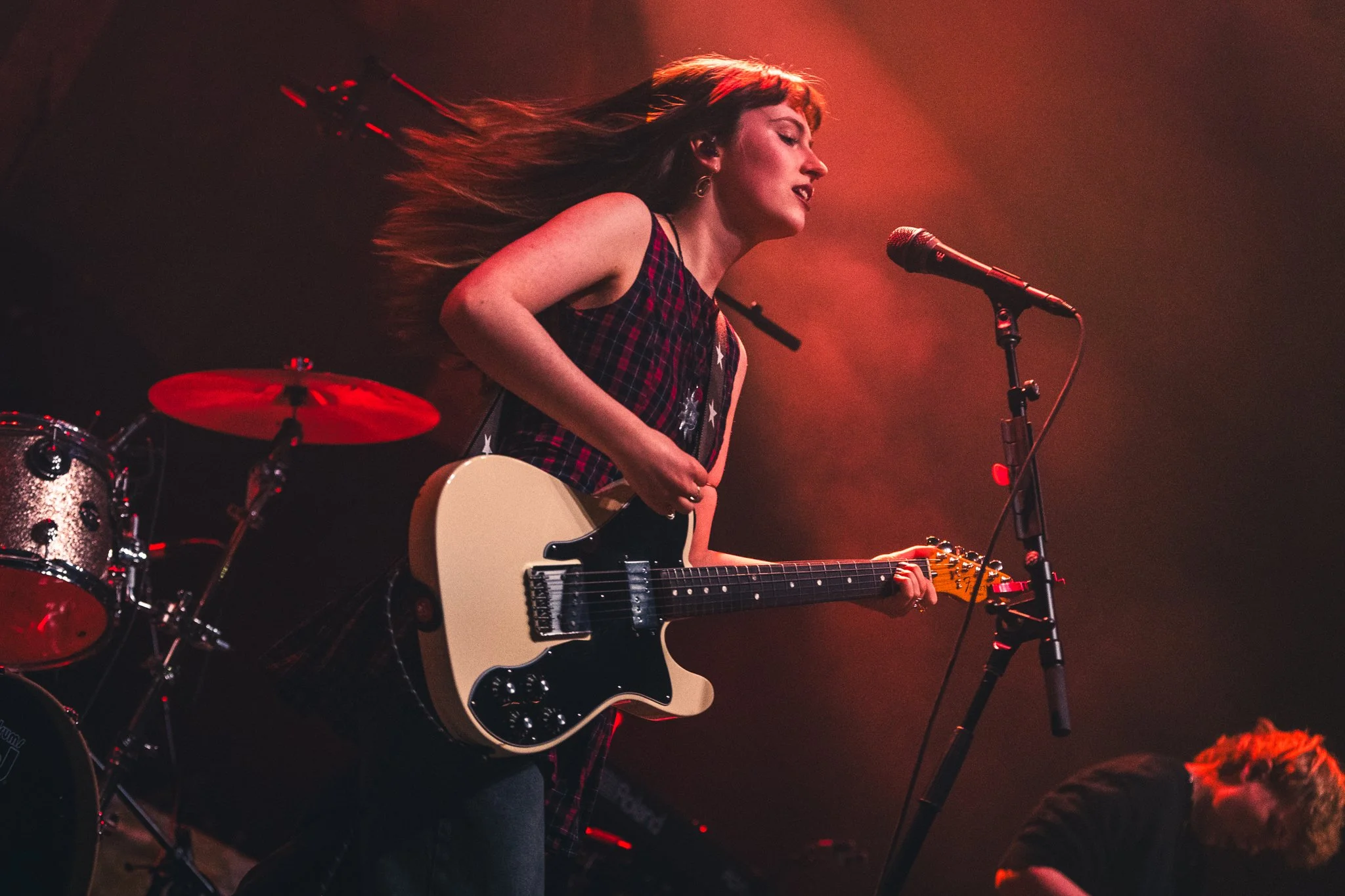
When you're just starting out, press companies aren't going to credential you without a publication or a portfolio behind you. So in the early days, go directly to the source. Reach out to bands on Instagram, email their management, and just simply ask. “Hey there! I’m an aspiring music photographer and was hoping I might be able to request a photo pass for your upcoming show. In exchange, more than happy to send over a gallery of my shots to you afterwards for your use!” Smaller and local acts are far more likely to say yes to someone building their portfolio than a mid-tier touring act with a full PR team. And if you have a ticket already, you’re going to have more luck than you think.
Once you have some work to show, the next step is finding a publication to shoot for. Smaller music publications are far more open to newer photographers than established outlets, and this is where a lot of photographers get their start. Ask other photographers at shows if they know of any smaller publications looking for contributors, check Facebook groups, or just Google “<your city> music publications”. This can help get you into most small to medium sized shows in your city, even arena shows on occasion. A word of advice though: if you're approaching a publication looking to score photo passes, be prepared to write. Press companies see value in the written review. The photos are important, but the review is often what gets you approved for the next show.
You Got the Pass. Now what?
Show up early. I mean it. If it's your first time at a venue, try to arrive right around doors. Scout the room, find the photo pit, and most importantly, talk to security or the box office to clarify the rules before you shoot. You do not want to break the rules, especially early on when your reputation is still being built.
The phrase you'll hear more than any other in this industry is "first three, no flash." It applies to the vast majority of shows. It’s pretty straightforward: you have access to the photo pit during the first three songs of the headliner's set, and you cannot use flash. After that, your camera goes away unless you've been told otherwise. For smaller venues without a dedicated pit, the rules around the first three are sometimes more relaxed, but the etiquette still applies.
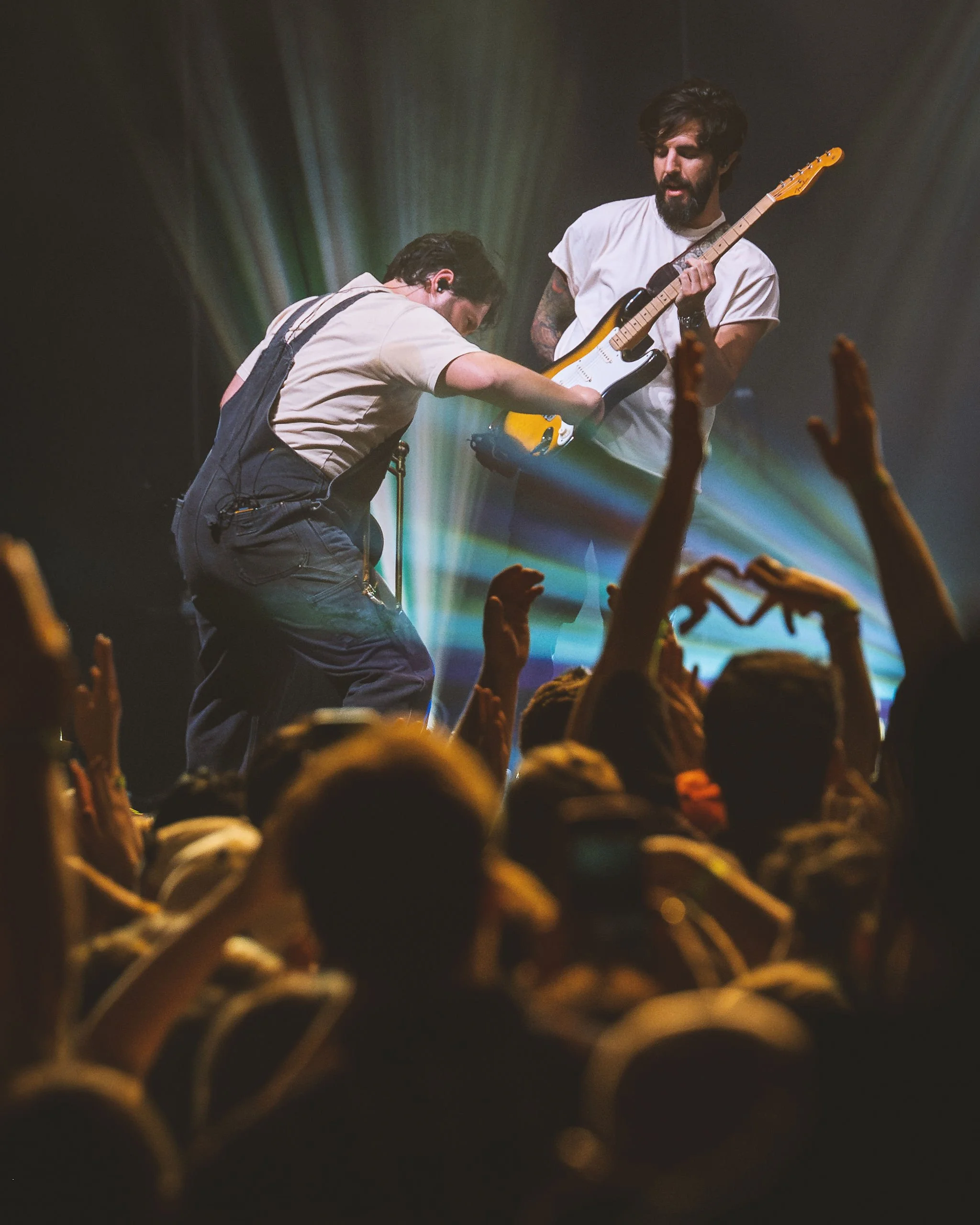
Always ask if crowd shooting is permitted after your three songs. Some bands and venues allow it and you can get genuinely great shots from the floor. Others are strict, and your camera goes back in the bag or into a venue locker. Either way, ask rather than assume. I made this mistake early on in my career and was escorted out over it. Embarrassing, maybe an overreaction, but totally avoidable.
Final note: Don't skip the opener. Headliners often have their own tour photographers. The opener usually doesn't, and they're the ones who want your photos the most. It's also one of the best ways to get your foot in the door with a band early in their career.
Pit Etiquette
Unless you've been hired directly by the band, your job in the pit is to be invisible. You are not there to push fans out of the way for a better angle or obstruct anyone's view of the show. The pit is a privilege, not a right, and how you carry yourself in it will follow you.
Wear dark clothing when you're shooting from the pit at a mid-sized or larger venue. It doesn't have to be all black, but a dark shirt and jeans keeps you from being a distraction in someone else's night. If you're shooting from the general crowd, it doesn't matter at all.
One rule that doesn't get talked about enough: do not post your photo pass online. I know it's tempting. Some passes have genuinely cool designs and they feel like a souvenir, which they are and you should absolutely keep them for yourself. But photo passes are how tours track access and security. Even if yours only got you into the venue and nowhere near backstage, posting it publicly creates a problem for the tour. Save it, frame it, throw it in a drawer. Just keep it off the internet.
After the Show
Turnaround time matters more than most new photographers realize. If you can get your review and gallery published within 48 hours of the show, PR companies notice. I always shoot for 24 hours. Late coverage has diminishing value. Nobody needs a review posted two weeks after a show.
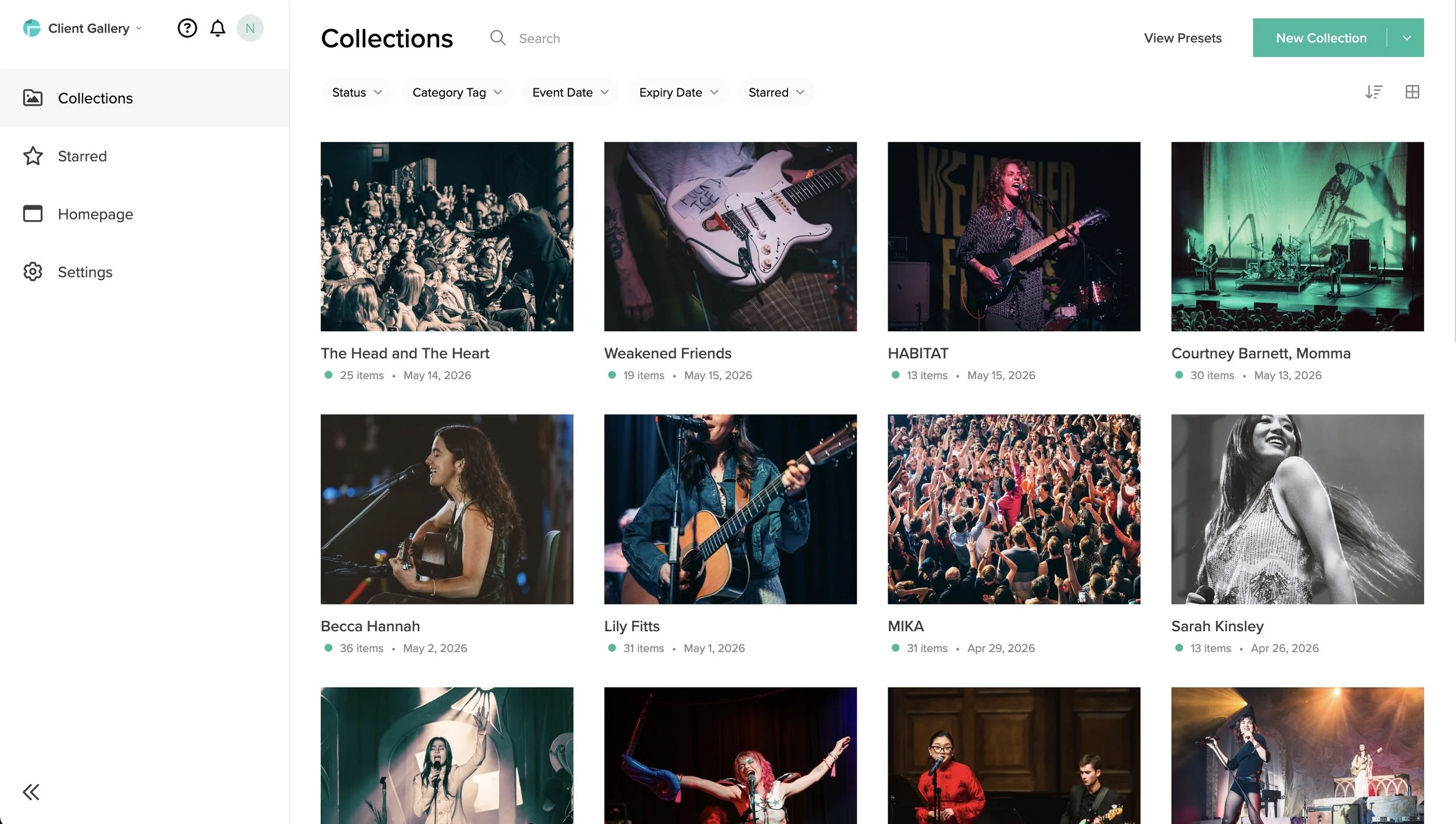
Pixieset dashboard view
For delivering photos to publications or bands, Google Drive works fine when you're starting out. Once you're shooting regularly, Pixieset is worth the investment. It's a professional photo delivery platform that's relatively inexpensive and sets you apart from photographers still sending Google Drive links.
Skip the watermark. It's dated and it gets in the way of the photo. If I see a watermark on a photo (especially in comic sans. Yes, people are doing this) I can assume they’re an older photographer or someone brand new. No one at the top of their game is slapping an ugly watermark over their concert photos.
A note on photo contracts: you'll run into them occasionally, especially with larger acts. Read them carefully. Clauses that require approval from the band's team, or restrict you from selling the images commercially, are standard and generally fine. What you want to watch out for are full rights grabs. These are contracts where you sign over your copyright and the band can use or sell your images without compensating you. Those are worth passing on. It's not just bad for you, it's bad for the industry.
The Long Game
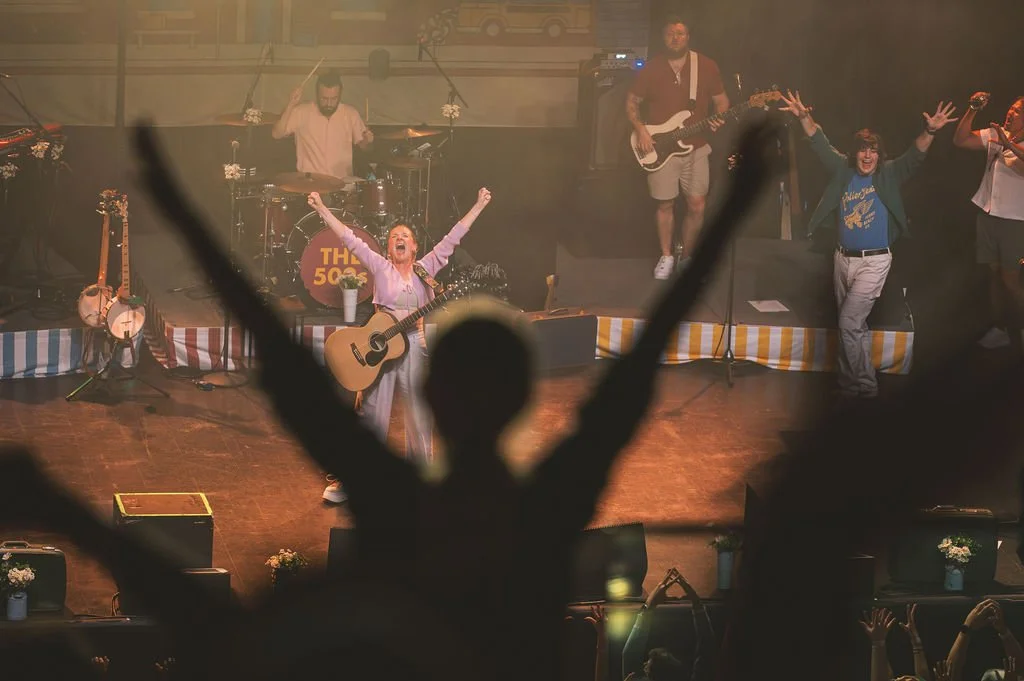
The single biggest factor in getting access to better shows isn't the quality of your photos. It's your reputation for being professional, reliable, and easy to work with. I get access to major shows through smaller publications because PR companies know I deliver good photos, write solid reviews, follow the rules, and turn everything around on time. That reputation gets built one show at a time.
Every credential leads to the next one. Treat every show like an audition for a bigger one, because it is. Most importantly, have fun! This can be one of the most rewarding areas of photography and genuinely a great way to meet new people. Don’t get bogged down by bad lighting or missing a shot. If you come away from a show with a new friend or one shot you like, that’s a win in my book.
